
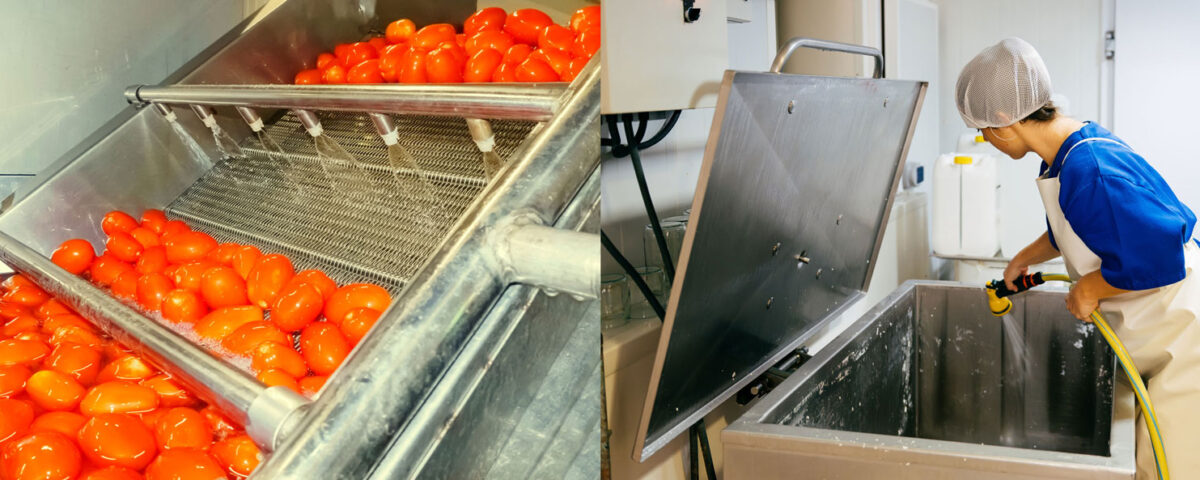
Every food and beverage plant depends on reliable hot water. From CIP systems and tank washing to sanitation and utility supply, water heating directly impacts food safety, compliance, and operating cost. While heat exchangers remain widely used, many processors are shifting to Direct Steam Injection (DSI) because of its precision, efficiency, and reduced risk of contamination.
Why Water Heating Safety Matters
Hot water supports food safety by controlling microbial growth during cleaning and sanitation. If heating equipment allows fouling or scale to accumulate, it creates potential harborage points for bacteria and increases the chance of chemical contamination. Protecting product integrity and meeting regulatory requirements means reducing these risks at the source.
How DSI Improves Plant Safety
Heat exchangers rely on metal surfaces for heat transfer. Over time, these surfaces can foul, scale, or harbor residues, which reduce efficiency and increase cleaning demands.
ProSonix’s self-cleaning DSI design eliminates these fouling concerns by avoiding heat transfer surfaces altogether. Instead, steam is introduced directly into the water stream. The advantages are straightforward:
- No Heat Transfer Surfaces: With no plates or tubes, there are fewer places for scale, deposits, or biofilms to form.
- Lower Contamination Risk: Removing these surfaces also removes one of the most common points for cross-contamination.
- Clean Steam, Clean Water: When paired with culinary-grade, filtered steam, DSI consistently produces hot water suitable for plant use.
Temperature Accuracy and Control
Hot water is only effective when it’s at the right temperature. DSI heats water instantly and maintains setpoints typically within ±1 °F. Because steam condenses directly into the water, there is no lag time or surface resistance, even as flow rates and plant demand fluctuate. For CIP and sanitation, this means consistent kill temperatures without overshoot, wasted energy, or cycle failures.
Maintenance and Reliability
Shell-and-tube and plate heat exchangers require frequent inspection and cleaning to control scaling and fouling. These interventions add downtime, labor, and chemical costs. DSI systems operate with fewer moving parts and without fouling-prone heat transfer surfaces, resulting in longer service intervals and higher system reliability.
Energy Utilization and Efficiency
DSI transfers 100 percent of steam’s thermal energy into the water stream. Heat exchangers lose efficiency through scale buildup, thermal resistance, and condensate losses. Over time, these differences translate into measurable savings in steam demand and reduced energy costs. For plants focused on sustainability and energy efficiency, DSI is a direct path to lowering resource use without compromising performance.
Practical Value for Food Processors
Direct Steam Injection is both a technical and operational upgrade. For engineers, it delivers higher thermal efficiency, tighter process control, and reduced maintenance demands. For plant managers, it ensures consistent hot water, lower downtime, and fewer contamination risks. Processors that have adopted ProSonix DSI technology see this as not just a change in heating equipment, but as an investment in food safety, compliance, and long-term reliability. Explore more ProSonix heating solutions for the food industry here.