
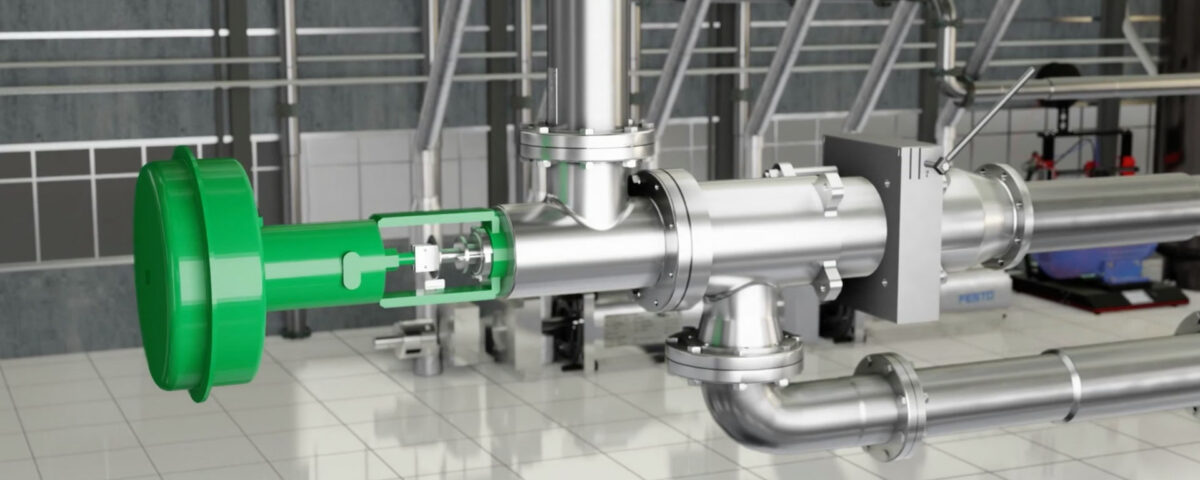
Jet cookers in ethanol and fructose plants operate in an abrasive, high-solids environment where poor performance can become expensive quickly. Frequent rebuilds and replacement parts are the most visible costs, but they are only part of the picture.
When a cooker does not mix steam and starch slurry effectively, the plant may also see less complete cookout, higher enzyme usage, reduced conversion efficiency, or the need to cook at lower solids than would otherwise be preferred.
A jet cooker can still reach its target temperature and yet be costing the plant money.
Much of that performance depends on how well the cooker maintains the geometry of the slurry gap between the steam nozzle and condensing tube.
Cooker Performance Affects More Than Temperature
Effective starch cooking requires more than simply heating slurry to a specified temperature. Steam and starch must mix rapidly and uniformly so the starch receives consistent heat exposure and shear.
Poor or uneven mixing can lead to less effective cookout. Plants may compensate with higher enzyme usage, more conservative operating conditions, or lower solids.
Running at lower solids increases the amount of water moving through the process, increases the mass that must be heated, and adds load to downstream equipment.
For this reason, the real operating cost of a jet cooker includes not only maintenance, but also how effectively it supports the overall starch conversion process.
Why the Slurry Gap Matters
The gap between the steam nozzle and condensing tube controls the slurry flow path through the cooker.
Operators can adjust this gap to create a thin ribbon of starch slurry, increasing contact between the slurry and steam and promoting rapid mixing, shear, and cookout.
The gap can also be opened when lower pressure drop is required, allowing operators to balance mixing intensity, slurry flow, pressure drop, and pumping requirements.
The challenge is maintaining a uniform gap around the full circumference as the condensing tube is adjusted.
If the gap becomes uneven, both mechanical life and process performance can suffer.
Uneven Gaps Create Localized Wear
In some jet cooker designs, the condensing tube can shift slightly out of alignment during adjustment. The resulting gap becomes narrower on one side and wider on the other.
Because slurry velocity increases through the narrower section, abrasive wear becomes concentrated in that area.
The result can be premature failure of a wear component even though much of the available wear surface remains usable. Instead of wearing evenly around the full circumference, one localized area determines when the component must be replaced.
That increases replacement part costs, maintenance labor, and the frequency of cooker rebuilds.
Uneven geometry can also affect pressure drop and slurry distribution, causing cooker performance to change as wear progresses.
A Concentric Gap Supports Wear Life and Cookout
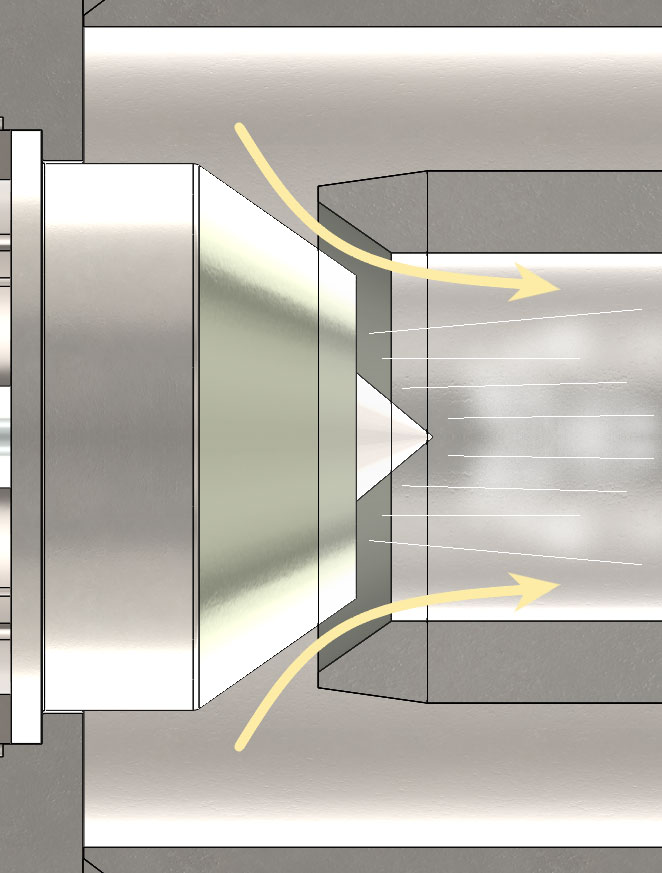
The ProSonix C-Series Jet Cooker uses a true coaxial design with multiple bearing surfaces that maintain alignment between the condensing tube and steam nozzle.
As the tube is repositioned, the slurry gap remains concentric around the full circumference of the cooker.
This creates a uniform 360-degree radial flow path rather than concentrating slurry through one section of the gap.
The tube rotates to adjust position, balancing the wear points for even longer component life.
From a maintenance standpoint, more uniform wear helps extend service intervals and reduce component replacement.

The same geometry also supports process performance by helping maintain consistent:
- Steam and slurry mixing
- Shear
- Pressure drop
- Temperature distribution
- Starch cookout
The design feature that helps prevent localized wear is therefore also important for maintaining consistent cooking performance over time.
Actual component life will depend on slurry abrasiveness, solids concentration, velocity, and operating conditions. The advantage of the coaxial design is that the adjustment mechanism itself does not create an uneven gap that accelerates wear in one location
Maintaining Performance as Conditions Change
Ethanol and fructose plants do not always operate at one fixed production rate or slurry condition.
Flow rates change. Solids concentration can vary. Pumping conditions change. Operators may need to adjust pressure drop to maintain desired cooker performance.
An adjustable slurry gap gives operators a way to balance these requirements. Opening the gap can reduce pressure drop, while closing it produces a thinner slurry ribbon and can increase mixing intensity and shear.
For plants with changing process rates, the optional ProSonix OptiShear™ Auto Drive allows the gap to be adjusted through the plant’s distributed control system.
The objective is not simply to maintain outlet temperature. It is to maintain the cooking conditions required for effective starch conversion without forcing the plant to compensate elsewhere in the process.
The Cost of a Jet Cooker Is the Cost of Operating It
Every jet cooker processing abrasive starch slurry will eventually require maintenance and replacement of wear components.
The question is how often that maintenance is required and how well the cooker performs between rebuilds.
A cooker that wears unevenly may require premature component replacement. A cooker that does not provide effective steam-slurry mixing may create additional costs through enzyme usage, process variability, or lower-solids operation.
By maintaining a concentric slurry gap, the C-Series is designed to address both sides of that equation: distributing wear more evenly while preserving the mixing conditions required for effective starch cookout.
The lowest-cost jet cooker is not necessarily the one with the lowest purchase price. It is the one that continues to provide effective starch cooking with fewer wear parts, fewer rebuilds, and fewer operating compromises over its service life.
If frequent rebuilds, high enzyme usage, or limitations on starch solids are increasing the cost of your cooking process, contact ProSonix to learn how the C-Series Jet Cooker can provide a more reliable long-term solution.